Seeing Double
Notions & Notes

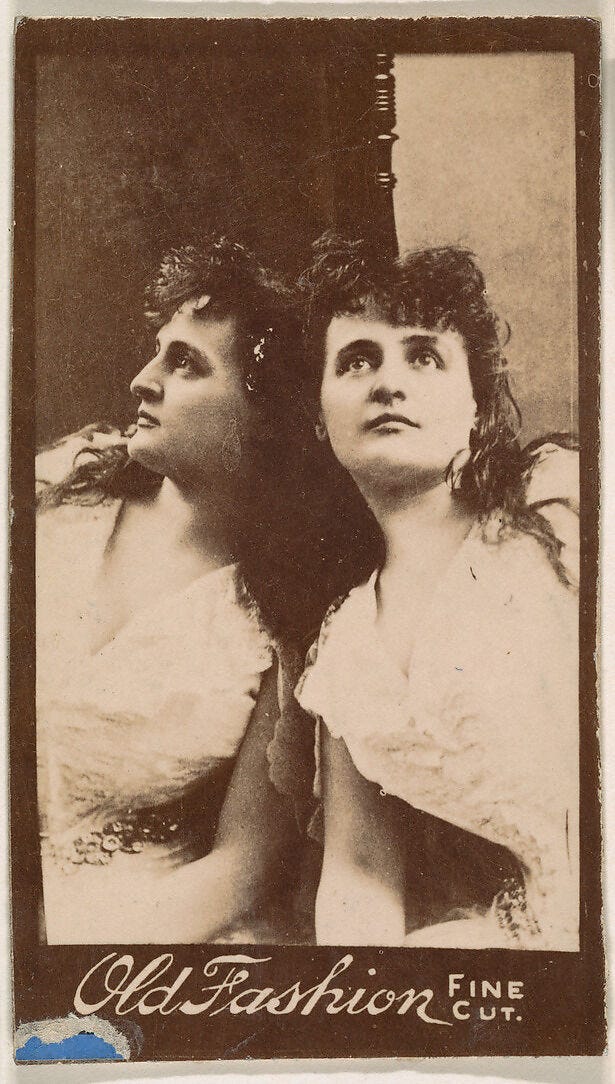
Gemini
There's a woman in the corner
Claiming she is just the former one of me
And I am her just out of context
And this weight that I've been leaning
And the persons I'm deceiving
And the food that I've been eating says I'm processed
And I can lack communication
I can lack coordination
Inside my awkward occupations like a fortress
And then she spits unto the ground
She says we'll all just figure out
If she is me, if I am her
It's just a process
And all the texts that I've avoided
All the persons I've annoyed
With all my flighty conversations
Out of context
And the car keys I have locked inside
The dishes I have dropped beside
The useless things I've bought for someone's profit
And there's a woman in the corner
Claiming she is just the former one of me
And I am her just out of context
And then she kissed me on the mouth
She said we'll all just figure out
If she is me, if I am her
It's just a process
And when I've gone too long without her
And I'm alone and I'm addicted to my phone
She cuts the cord she pulls the power
And makes me sit with my baggage
All the haggard things I didn't want to feel
She peels me back like I'm her cabbage
And there's a woman in the corner
Who makes me pull the fuck over
Just to stare at purple clover off the highway
And see the clover as a gift
A gift I almost missed
You know I finally begin to feel better
Time you know
Has its stones
You were a boulder then
You're in my pocket now
Time you know
Has its stones
You were a ghost back then
I can see you now
I can honor you now
I’ve been listening to this song on repeat for months. Every time I need to take a deep breath and return to myself, Heynderickx’s lyrics orient me away from the noise outside to stop and look and listen.
It’s a song about doubles and dueling selves where language—the play of sound and meaning—is also doubled. The processed food one eats is in opposition to the process of disentangling the selves, “if she is me if I am her it’s just a process” Notice how many lines double over themselves to equate two things: “I'm alone and I'm addicted to my phone / She cuts the cord she pulls the power.” The loneliness and our addiction to our phones is as much the same thing as cutting the cord and pulling the power. Even her alliteration there—the cord is cut, the power is pulled—serves to mirror and double.
Heynderickx says a lot about what it is to be human in society these days. We know we don’t need many of the things we buy “for someone’s profit,” but trends and media, things made for planned obsolescence, and the need for a little rush of being generous to ourselves in a bleak corporate hellscape amid climate collapse often overpower our better selves. There’s a tension, too, between the intellectual (you know you should stop looking at the phone, know the culture of consumption is toxic) and what is felt (the kiss from the past self, the purple clover). These double selves—the self who engages with phones/processed food/profit and the former self in the corner—confront each other so viscerally. She spits on the ground in vehement challenge, she kisses in compassionate forgiveness to figure out who is who. Until finally, the woman in the corner forces the one driving on the highway to pull the fuck over and look at the purple clover. In a song with little imagery, suddenly you can see it, the purple flowers bobbing in the suction wind of the passing cars, and you can even smell that sweet green smell of your childhood. You can feel it in how Heynderickx’s voice suddenly soars.
Don’t you feel that return to yourself now too? Don’t you feel reoriented to wonder and witnessing and the calm of being with yourself?
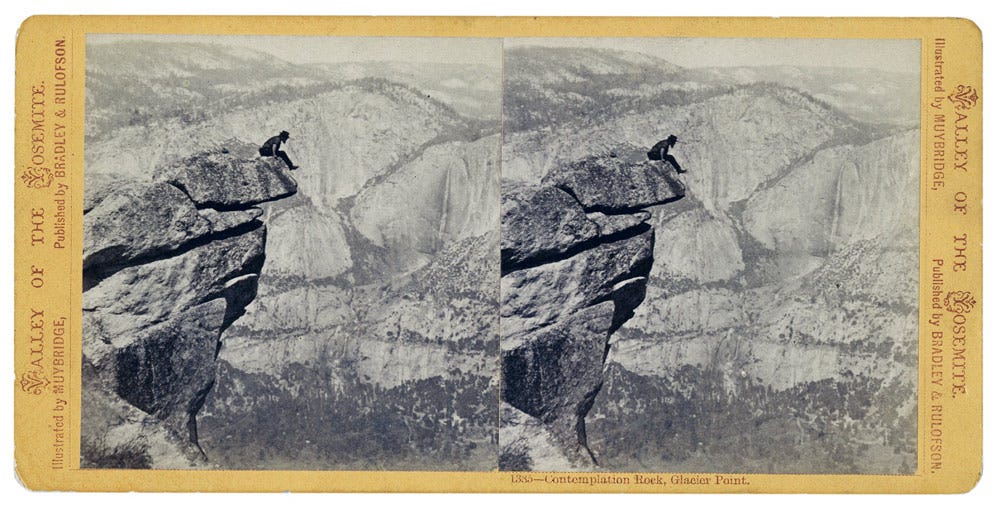
While I think technology and capitalism have made this tension between the outer self who engages in society and the inner self—of imagination, of noticing, of the spirit—much more difficult to bear, it is not a new struggle. So I’m pairing Heynderickx’s song with one of my favorite fiction writers of all time:
Borges and I
translated from the Spanish by Kenneth Krabbenhoft
The other one, Borges, is the one things happen to. I wander around Buenos Aires, pausing perhaps unthinkingly, these days, to examine the arch of an entranceway and its metal gate. I hear about Borges in letters, I see his name on a roster of professors and in the biographical gazetteer. I like hourglasses, maps, eighteenth-century typeface, the taste of coffee, and Stevenson’s prose. The other one likes the same things, but his vanity transforms them into theatrical props. To say that our relationship is hostile would be an exaggeration: I live, I stay alive, so that Borges can make his literature, and this literature is my justification. I readily admit that a few of his pages are worthwhile, but these pages are not my salvation, perhaps because good writing belongs to no one in particular, not even to my other, but rather to language and tradition. As for the rest, I am fated to disappear completely, and only a small piece of me can possibly live in the other one. I’m handing everything over to him bit by bit, fully aware of his nasty habit of distortion and aggrandizement. Spinoza knew that all things desire to endure in their being: stones desire to be stones, and tigers tigers, for all eternity. I must remain in Borges rather than in myself (if in fact I am a self), and yet I recognize myself less in his books than in many others, or in the rich strumming of a guitar. Some years ago, I tried to get away from him: I went from suburban mythologies to playing games with time and infinity. But these are Borges’ games now—I will have to think of something else. Thus, my life is an escape. I will lose everything, and everything will belong to oblivion, or to the other.
I don’t know which of us wrote this.
Like Heynderickx, Borges contrasts the public self, the famous author, with a more interior self, but there’s less clarity between the two. They share the same loves of maps and hourglasses and coffee, they both take notice of an arch in the architecture of their beloved Buenos Aires, just as Heynderickx notices the clover. The one who observes and finds pleasure in his physical existence serves the one who writes. The one who writes turns that raw experience into props, into literature that justifies the existence of the other "I.”
In wrestling with these two selves, Borges explores the impulse to make art. He interrupts his efforts at distinguishing the two Borgeses to allude to Spinoza, who “knew that all things desire to endure in their being: stones desire to be stones, and tigers tigers, for all eternity.” There’s something self-aggrandizing about making your experience permanent through art. In doing so, you write over the more immediate self listening to the guitar or tasting the coffee or walking the street tonight. “I am fated to disappear completely, and only a small piece of me can possibly live in the other one.” By making art and putting it out there for others to consume and connect to, the immediate self is all but lost to the art and artifice of the writer.
It rings true when Borges writes, “I recognize myself less in his books than in many others, or in the rich strumming of a guitar.” Heynderickx’s song has meant something to me, has made my experience tangible in some way, and you, reader, know this feeling too, when a song or poem or painting or whatever strikes a chord for you. (I’m noticing that “rings true” and “strikes a chord” are both sonic idioms, which feels appropriate because sensing the intangible of sound waves is not so very different from feeling a piece of art). What makes the strumming of the guitar so much more powerful to Borges than his own writing is that invisible sound-wave connection between an artist and their audience.
This is why I keep returning to that moment of grace he offers his other self: “Perhaps because good writing belongs to no one in particular, not even to my other, but rather to language and tradition.” When I first read Borges’s stories my freshman year of college, it felt like driving around a bend in the road and suddenly a vista opens up before you and you see the breadth of possibility all around you in rolling blue waves of hills. I felt changed. I spent the next four years trying to imitate Borges’s style until, eventually, I found my own obsessions (metaphor and birds and natural light and all forms of the word “possible”) and built my own style and voice. I’m still finding those things, I think, and that perpetual meandering search, feeling my way through, is rewarding and wonderful. When Borges published his stories, they ceased to be his (the immediate Borges’s) and became that other Borges’s (the author) and belonged to language and tradition and something bigger than a single person. So that a teenage girl fifty years in the future could read his stories and find something of herself or, more accurately, find a path to herself.
In another of Heynderickx’s songs from the same album, she reminds us “there's an artistry in the day-to-day to day today.” And at the center of these two pieces, where double selves vie against each other, is the effort to reconnect to the authentic, the immediate, to feel the clover on the side of the highway or the guitar strum or whatever reconnects you to you. Pause, observe, wonder: these are the elements of living day-to-day that make life a little piece of art.